
What Is a Pediatric Dentist and Why Children Need One
- 4 hours ago
- 7 min read
Introduction
When it comes to your child's health, you put a lot of thought into who you trust. Their pediatrician understands childhood development. Their teacher knows how kids learn. So why should their dentist be any different?
That is the idea behind pediatric dentistry. A pediatric dentist is a dental professional who focuses on caring for children's teeth, gums, and oral development — from infancy all the way through the teenage years.
Many parents wonder:
• What is a pediatric dentist, exactly?
• How is a pediatric dentist different from a regular dentist?
• Does my child really need to see one?
• When should my child start going?
This guide answers all of those questions so you can feel confident about your child's dental care from the very first visit.
What Is a Pediatric Dentist?

A pediatric dentist — sometimes called a kids dentist or children's dentist — is a dental professional who focuses exclusively on the oral health of children. Their entire practice, team, and environment is built around making dental care comfortable and effective for young patients.
Pediatric dentists dedicate their careers to understanding how children's teeth and jaws grow, how to communicate with kids at every age, and how to create positive dental experiences that set children up for a lifetime of healthy habits.
At Sola Kids Dental and Orthodontics, our team is dedicated to pediatric dentistry — meaning every child who walks through our doors receives care designed specifically for them. Learn more on our Pediatric Dentistry page.
Pediatric Dentist vs. Regular Dentist: What Is the Difference?

A general dentist can treat patients of all ages — including children. But there are meaningful differences between a general dentist and a dentist who focuses on kids that are worth understanding.
Focused experience with children

A pediatric dentist works exclusively with children, which means their entire team, environment, and approach is built around young patients. They understand how kids think, what makes them nervous, and how to make a visit feel manageable — even fun.
Child-friendly office environment

Pediatric dental offices are intentionally designed to be welcoming for kids — bright colors, comfortable surroundings, smaller equipment sized for children's mouths, and a team that knows how to connect with young patients. Walking into a pediatric office feels very different from a typical dental clinic.
Communication style

Pediatric dentists use child-focused techniques like Tell-Show-Do — explaining each step before doing it, showing children the tools in a non-threatening way, and moving at the child's pace. This approach builds trust and reduces anxiety, especially for younger or nervous children.
Whole-picture monitoring

Pediatric dentists look beyond just individual teeth. They monitor jaw growth, eruption patterns, bite alignment, and habits like thumb sucking or mouth breathing that can affect development over time — giving parents a fuller picture of their child's oral health.
Experience with children who need extra support
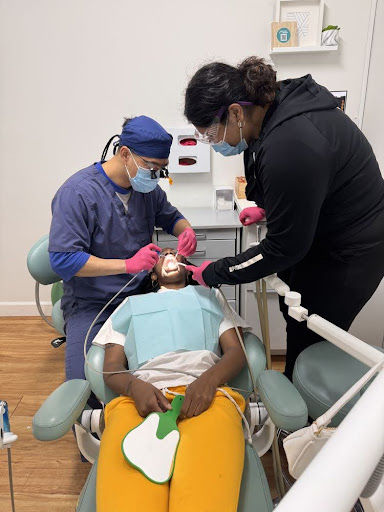
Pediatric dentists are experienced in caring for children with developmental, medical, or behavioral needs. This makes them a great choice for families whose children need extra patience and a more individualized approach during dental visits.
Why Do Children Need a Pediatric Dentist?

Children are not just small adults. Their teeth, jaws, and oral development go through constant, rapid change from birth through the teenage years. A pediatric dentist understands this process in depth and can:
Monitor development at every stage
From a baby's first tooth to the last permanent molar coming in during the teen years, a pediatric dentist tracks how teeth are erupting, how the bite is forming, and whether the jaw is developing normally. Problems caught early are almost always easier — and less costly — to address.
Prevent cavities before they start
Cavities are the most common chronic condition in children — more common than asthma. Pediatric dentists focus on prevention: professional cleanings, fluoride treatments, dental sealants, and guidance for both parents and kids on building healthy habits at home.
Build positive dental experiences
Research shows that early dental experiences shape how children feel about dental care for the rest of their lives. A pediatric dentist creates positive, low-stress visits that help children grow up without dental anxiety — something that benefits them well into adulthood.
Spot orthodontic concerns early
Pediatric dentists are often the first to notice signs that a child may benefit from orthodontic evaluation. Identifying bite problems, crowding, or jaw alignment issues early means more options and often simpler care.
Manage dental anxiety with care
Many children feel nervous about dental visits. Pediatric dentists are experienced in gentle, child-focused approaches that help even the most anxious child feel safe and at ease.
What Age Should a Child First See a Pediatric Dentist?
Earlier than most parents expect.
The American Academy of Pediatric Dentistry recommends that a child's first dental visit happen by their first birthday — or within six months of their first tooth appearing, whichever comes first.
This surprises many parents. Why so early? Because:
• Baby teeth can develop cavities as soon as they erupt
• Early visits help identify concerns while they are easiest to address
• Starting early helps children become comfortable with the dental environment before any treatment is needed
• Parents receive guidance on feeding habits, brushing routines, and what to expect as more teeth come in
Regular checkups should continue every six months from that first visit onward. Learn more in our guide on how often kids should go to the dentist.
What Services Does a Pediatric Dentist Provide?
Pediatric dentists offer a full range of dental services designed for children at every stage of growth. Common services include:
Preventive care
Routine dental exams, professional cleanings, fluoride treatments, and dental sealants. Prevention is the foundation of pediatric dentistry — the goal is to keep teeth healthy and catch problems early.
Dental exams and X-rays
Regular exams allow the dentist to monitor tooth development, check for early signs of decay, and evaluate the bite and jaw. Learn what to expect at a dental exam at our office.
Cavity treatment and fillings
When cavities occur, pediatric dentists use gentle techniques and child-friendly materials — including tooth-colored composite fillings — to restore teeth comfortably.
Early orthodontic evaluation
Pediatric dentists watch for signs that a child's bite or jaw may need attention. Early evaluation can prevent more complex problems later.
Emergency dental care
Accidents happen. Pediatric dentists are experienced in managing dental injuries — knocked-out teeth, chipped teeth, toothaches, and infections — quickly and calmly in a way that reassures both children and parents.
Care for children who need extra support
Children with developmental needs, sensory sensitivities, or behavioral challenges receive individualized care. A pediatric dental office is designed with these children in mind.
What Happens at a Pediatric Dental Visit?
If you are bringing your child for the first time, knowing what to expect can help everyone feel more relaxed.
A warm welcome
Your child is greeted by a friendly team in an environment designed to feel comfortable and inviting — not clinical or intimidating.
Health history review
For new patients, the team will ask about your child's overall health, any medications, and any specific concerns you have noticed.
Gentle examination
The dentist examines your child's teeth, gums, bite, and jaw. For older children, X-rays may be taken to check areas not visible during the exam.
Professional cleaning
A dental hygienist removes plaque and tartar buildup, polishes the teeth, and may apply fluoride to strengthen enamel.
Parent guidance
The dentist discusses findings with you, explains what is developing normally, and gives practical tips for home care — including brushing technique, diet advice, and what to watch for before the next visit.
Positive reinforcement
Children are celebrated for their bravery. Stickers, small prizes, and enthusiastic encouragement from the team make the experience something kids can feel proud of.
Can a Pediatric Dentist See Adults Too?
This is a question many families ask — especially parents who love the environment and wonder if they can be seen alongside their kids. Our blog post on whether pediatric dentists take adults explains this in more detail, including the situations where it may be possible.
Frequently Asked Questions About Pediatric Dentists
Is a pediatric dentist better for my child than a family dentist?
For young children — especially infants, toddlers, and school-age kids — a pediatric dentist offers an environment, communication style, and level of child-focused experience that a general or family dentist may not have. For older teens, either may work well depending on the practice.
What age does a child stop seeing a pediatric dentist?
Most pediatric dentists see patients through age 18. Some practices also see young adults, particularly those with ongoing care needs. Your dentist will let you know when transitioning to a general dentist makes sense.
How do I know if a dentist focuses on children?
Look for a dental practice that works exclusively or primarily with children, has a child-friendly office environment, and a team experienced in working with young patients and managing dental anxiety in kids.
Do pediatric dentists accept Medi-Cal?
Many pediatric dentists — including our team at Sola Kids Dental — accept Medi-Cal and Denti-Cal. Coverage includes preventive care, exams, cleanings, fluoride treatments, and cavity treatment. Contact our office to confirm your child's specific benefits.
My child is scared of the dentist. Can a pediatric dentist help?
Yes — this is one of the most important reasons to choose a dentist who focuses on kids. Techniques like Tell-Show-Do, nitrous oxide, and a calm, encouraging team make a real difference for anxious children. Many kids who struggle elsewhere do much better in a pediatric setting.
What if my child has special needs?
Pediatric dentists have experience caring for children with a wide range of developmental, medical, and behavioral conditions. Let our team know before the visit so we can plan an approach that works best for your child.
How is a pediatric dentist different from an orthodontist?
A pediatric dentist focuses on overall oral health — teeth, gums, hygiene, and development — for children. An orthodontist focuses specifically on bite alignment and straightening teeth using braces or aligners. At Sola Kids Dental and Orthodontics, we offer both under one roof.
Ready to Find a Pediatric Dentist Your Child Will Actually Love?
At Sola Kids Dental and Orthodontics, we have built our practice around one simple goal: making every child feel safe, cared for, and confident at every visit. From first teeth to teen smiles, our team is here for every stage of your child's dental journey.
We proudly serve families throughout South Los Angeles and accept Medi-Cal, Denti-Cal, and most PPO insurance plans.
Book your child's first visit today:
Website: www.solakidsdental.com
Phone: (323) 325-5641


Comments