
What Does a Pediatric Dentist Do? Services Explained for Parents
If you are new to pediatric dentistry — or if you are choosing a dental home for your child for the first time — you may be wondering exactly what a pediatric dentist does and what services to expect. The short answer is that a pediatric dentist provides complete dental care for children from infancy through the teen years, with every service tailored to the unique needs of developing smiles.
This guide walks through every service a pediatric dentist provides, what each one involves, and why it matters for your child's long-term oral health.
What Is a Pediatric Dentist?

A pediatric dentist is a dental professional who focuses exclusively on children's oral health. Their practice, environment, and team are built entirely around young patients — from infants with their first tooth to teenagers with a full set of permanent teeth.
For a deeper overview of how pediatric dentistry differs from general dental care, visit our guide on what is a pediatric dentist and why children need one (link: https://www.solakidsdental.com/post/what-is-a-pediatric-dentist-and-why-children-need-one).
Pediatric Dentist Services: A Complete Overview

1. Routine Dental Exams
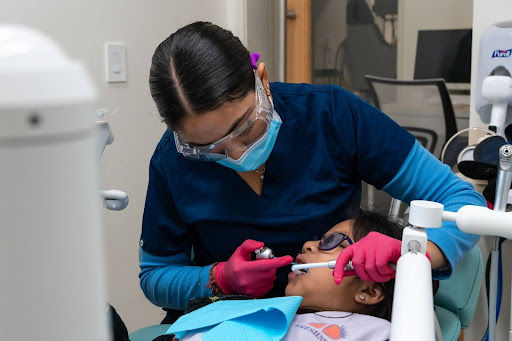
The foundation of pediatric dental care is the routine exam — typically scheduled every six months. During an exam, the dentist checks each tooth for signs of decay, evaluates gum health, assesses bite and jaw development, and reviews eruption patterns to confirm teeth are coming in as expected. Our dental exam page (link: https://www.solakidsdental.com/dental-exam) explains what a routine visit at Sola Kids Dental looks like in detail.
2. Professional Dental Cleanings

Even children who brush and floss well at home benefit from professional cleanings. A dental hygienist removes plaque and tartar buildup that regular brushing cannot reach — particularly between teeth and along the gumline — then polishes the teeth. Learn more on our dental cleanings page (link: https://www.solakidsdental.com/dental-cleanings).
3. Dental X-Rays
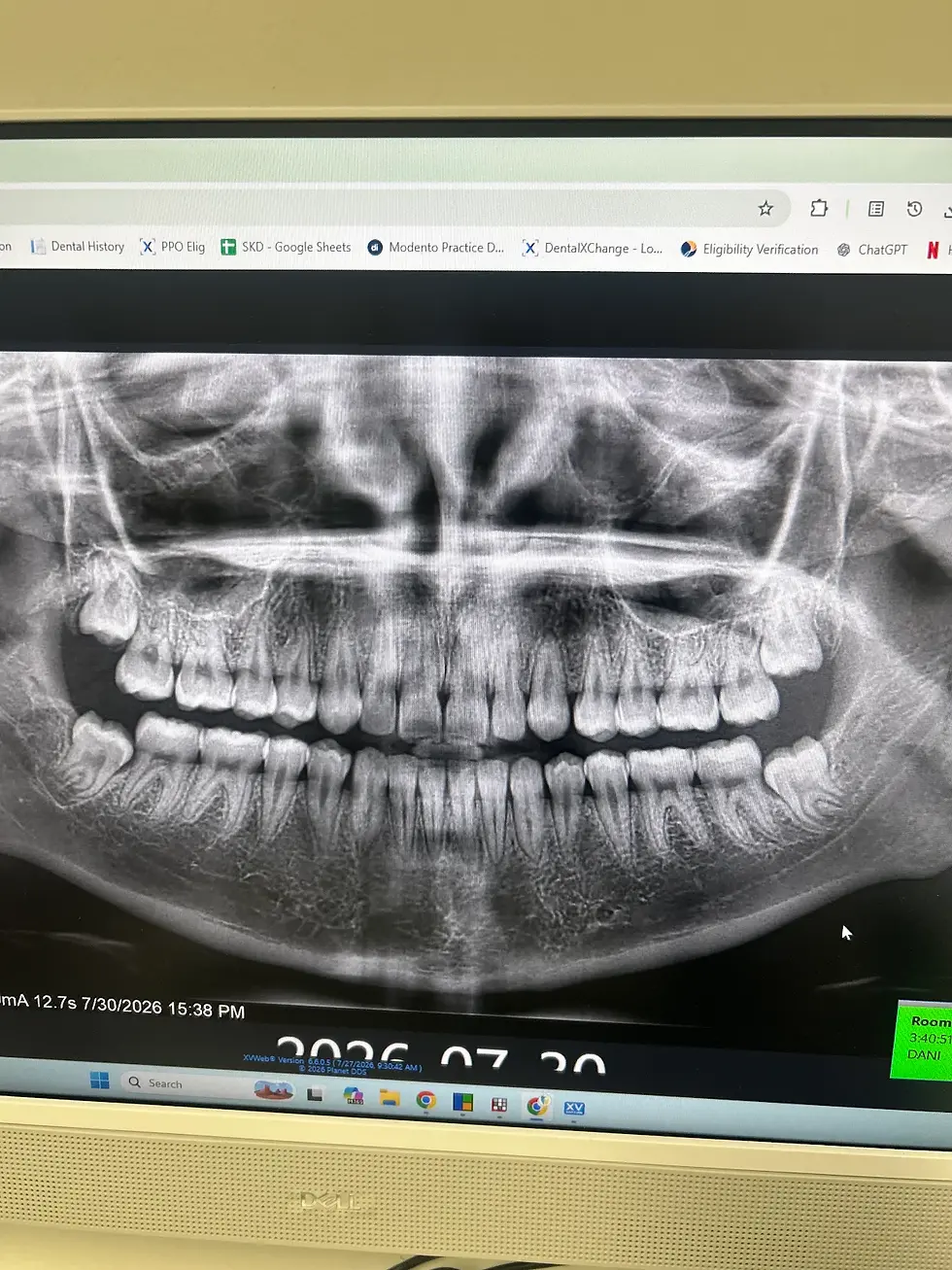
X-rays allow the dentist to see between and beneath teeth — areas that are impossible to examine visually. For children, X-rays help detect cavities between teeth early, monitor developing permanent teeth beneath the gumline, and identify any eruption issues before they become problems. Pediatric dental offices use low-dose digital X-rays that minimize radiation exposure.
4. Fluoride Treatments

Fluoride strengthens tooth enamel and makes teeth more resistant to decay. Professional fluoride treatments — applied as a varnish, gel, or foam — deliver a higher concentration of fluoride than toothpaste alone, providing an extra layer of protection against cavities. They are quick, painless, and one of the most cost-effective preventive tools in pediatric dental care.
5. Dental Sealants
Sealants are thin protective coatings applied to the chewing surfaces of back molars — the teeth most prone to cavities because of their deep grooves where bacteria collect. The application is fast and painless. Sealants can reduce the risk of cavities in treated teeth by up to 80 percent and are especially recommended when permanent molars erupt around ages six and twelve.
6. Cavity Treatment and Fillings
When a cavity does develop, a pediatric dentist removes the decayed portion of the tooth and restores it with a filling. Children's dentists use child-friendly techniques and age-appropriate materials — including tooth-colored composite resin fillings that blend with natural teeth. For a detailed comparison of filling options, see our guide on composite vs. silver fillings for kids (link: https://www.solakidsdental.com/post/composite-vs-silver-fillings-for-kids-what-parents-should-know).
7. Pulp Therapy (Baby Root Canal)
When decay reaches the inner pulp of a baby tooth, pulp therapy removes the infected tissue and seals the tooth to prevent further infection — allowing the tooth to remain in place until it naturally falls out. Preserving baby teeth is important for spacing, speech, and the proper guidance of permanent teeth.
8. Tooth Extractions
When a tooth is too damaged to save — or when a baby tooth is blocking a permanent tooth from erupting properly — extraction may be recommended. Pediatric dentists perform extractions using gentle, child-appropriate techniques and local anesthesia to ensure your child is comfortable throughout.
9. Space Maintainers
When a baby tooth is lost early — whether from decay, injury, or extraction — a space maintainer holds the gap open so the permanent tooth can erupt into the correct position. Without one, neighboring teeth may shift into the space, causing crowding and potential orthodontic problems down the line.
10. Early Orthodontic Evaluation
Pediatric dentists monitor jaw and bite development at every visit. When they notice signs that orthodontic treatment may be beneficial, they refer for an evaluation. At Sola Kids Dental & Orthodontics, we offer both pediatric dental care and braces (link: https://www.solakidsdental.com/braces) under one roof.
11. Mouth Guards for Sports
Custom-fitted mouthguards protect teeth, lips, cheeks, and jaw during contact sports. A custom mouthguard from a dental office fits far better and provides more protection than a store-bought option — and children are more likely to wear it because it is comfortable.
12. Emergency Dental Care
Accidents happen — a knocked-out tooth, a broken tooth from a fall, a sudden toothache, or a dental abscess. At Sola Kids Dental, we provide emergency dental services (link: https://www.solakidsdental.com/emergency-dental-service-in-south-los-angeles) across South Los Angeles. If your child has a dental emergency, call (323) 325-5641 immediately.
13. Care for Children with Special Needs
Pediatric dentists have experience working with children who have developmental, behavioral, medical, or sensory needs that require a more individualized approach. This may include modified appointment structure, additional preparation time, sensory accommodations, or sedation options.
14. Fluoride Varnish for Infants and Toddlers
For very young children, fluoride varnish can be applied to early teeth at dental checkups as a preventive measure against early childhood caries. This is quick, painless, and effective — and can be applied from the moment a first tooth appears.
Preventive Care vs. Restorative Care: What Is the Goal?
The goal of every pediatric dental visit is to keep your child's mouth as healthy as possible so that restorative treatment — fillings, extractions, pulp therapy — is rarely or never needed. Prevention is always preferable and always more cost-effective than treatment.
At Sola Kids Dental & Orthodontics, we prioritize preventive dental care at every visit. Learn more on our dental treatments page (link: https://www.solakidsdental.com/dental-treatment-in-los-angeles).
What to Expect at a Pediatric Dental Visit at Sola Kids Dental
Every visit follows a consistent structure designed to be efficient, thorough, and comfortable:
- Warm welcome from a team that knows your child by name
- Health history review for new patients or updates for returning ones
- Gentle exam of teeth, gums, bite, and jaw development
- Professional cleaning and polishing
- X-rays when indicated by age or clinical need
- Fluoride treatment or sealants as appropriate
- Parent consultation - findings explained clearly, home care guidance provided
- Positive reinforcement and celebration of your child's cooperation
Frequently Asked Questions
What services does a pediatric dentist provide?
Pediatric dentists provide routine exams, professional cleanings, X-rays, fluoride treatments, dental sealants, cavity treatment and fillings, pulp therapy, extractions, space maintainers, early orthodontic evaluation, sports mouthguards, and emergency dental care. All services are tailored specifically to children's developmental needs.
What is the difference between a pediatric dentist and a general dentist?
A pediatric dentist focuses exclusively on children — their environment, communication, equipment, and every service offered is designed specifically for young patients. A general dentist treats patients of all ages and may see children, but the level of child-specific training and behavior management expertise differs significantly.
At what age should my child start getting dental X-rays?
Most pediatric dentists recommend X-rays when teeth begin touching — typically around age two to three — so that decay between teeth can be detected early. The frequency depends on your child's individual cavity risk. Digital X-rays used in pediatric offices emit very low radiation.
Does my child need dental sealants?
Dental sealants are strongly recommended for most children when their permanent molars erupt — typically around ages six and twelve. They reduce cavity risk in back teeth by up to 80 percent and are one of the most cost-effective preventive investments in pediatric dental care.
What should I do if my child has a dental emergency?
Call Sola Kids Dental immediately at (323) 325-5641. For a knocked-out permanent tooth, keep it moist in milk or between the cheek and gum, and get to a dental office within 30 minutes if possible. Do not attempt to re-implant the tooth yourself.
Does Sola Kids Dental accept Medi-Cal?
Yes. We accept Medi-Cal, Denti-Cal, and most PPO dental insurance plans. Coverage includes preventive exams, cleanings, fluoride, sealants, and restorative treatment. Visit our insurance page (https://www.solakidsdental.com/insurance) or call (323) 325-5641 to verify your child's benefits.
Why Sola Kids Dental for Your Child's Dental Care
At Sola Kids Dental & Orthodontics, we offer the full range of pediatric dental services across four South Los Angeles locations. We accept Medi-Cal, Denti-Cal, and most PPO insurance plans — and our team provides care in both English and Spanish.
📞 Call us: (323) 325-5641
📅 Book a dental exam: https://www.solakidsdental.com/dental-exam
Comments