
Teeth Crowding in Kids: When It Becomes an Orthodontic Problem
Introduction
If you have noticed that your child's teeth look a little tight, overlapping, or out of place, you are not alone. Teeth crowding in kids is one of the most common orthodontic concerns parents bring to our team at Sola Kids Dental and Orthodontics.
Many parents wonder:
• Is crowding normal at this age?
• Will it fix itself as my child grows?
• Does my child need to see an orthodontist?
• When does crowding become a real problem?
The short answer: some mild crowding is a normal part of development, but moderate to severe crowding almost never corrects itself on its own. In fact, without the right treatment at the right time, crowded teeth can lead to bigger problems — including cavities, gum issues, bite problems, and more complex orthodontic work later.
This guide explains what causes teeth crowding in children, how to tell when it becomes an orthodontic problem, and how early evaluation can make a real difference.
What Is Teeth Crowding in Kids?

Dental crowding — also called tooth overcrowding — happens when there is not enough space in the jaw for all the teeth to come in properly. When teeth run out of room, they begin to:
• Overlap or stack on top of each other
• Rotate out of their normal position
• Push neighboring teeth sideways
• Erupt at unusual angles
• Become partially blocked by other teeth
Crowding can affect baby teeth, permanent teeth, or both. It can appear at the front of the mouth or in the back, and it can be mild, moderate, or severe.
According to the American Association of Orthodontists, crowding is one of the most common reasons children are referred for orthodontic treatment.
What Causes Crowded Teeth in Children?

Crowding rarely has a single cause. It is usually a combination of genetics and development. Common causes include:
Jaw Size and Tooth Size Mismatch
If a child inherits a smaller jaw from one parent and larger teeth from another, there simply may not be enough room for all the teeth to fit comfortably.
Early or Late Loss of Baby Teeth
When a baby tooth falls out too early — due to decay, trauma, or extraction — neighboring teeth can drift into the empty space. This reduces the room available for the permanent tooth underneath. On the other hand, if baby teeth stay too long, they can block or redirect the incoming permanent tooth.
Genetics
Crowding tends to run in families. If a parent had crowded teeth, there is a good chance their child may experience it too.
Oral Habits
Prolonged habits like thumb sucking, pacifier use, or mouth breathing can affect how the jaw develops and how teeth grow in. You can learn more in our post on how thumb sucking can affect your child's teeth.
Narrow Palate
A high, narrow upper palate does not leave enough width for teeth to spread out properly, which often leads to crowding — especially in the front of the mouth.
Signs Your Child May Have Crowded Teeth
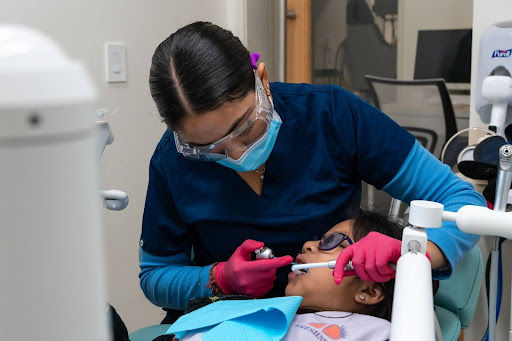
Not all crowding is obvious from the outside. Here are signs to watch for:
Visible overlapping teeth

You can see teeth clearly stacked or rotated, especially the lower front teeth or upper canines.
Teeth that seem to stick out
A tooth erupting out of line — often a canine that has no room — is a strong sign of crowding underneath.
Difficulty brushing and flossing

If your child struggles to floss certain areas or you notice food constantly getting stuck in the same spot, crowding may be making those areas inaccessible.
Baby teeth not falling out in the right order
If permanent teeth are erupting behind or beside baby teeth that have not fallen out yet, this is a sign the mouth is running out of space.
Complaints about jaw discomfort
Some children experience jaw soreness, headaches, or clicking sounds when crowding puts pressure on the bite.
Crooked smile or uneven gaps
Asymmetry in the smile — like teeth that lean one direction or large gaps on one side — can signal that teeth are shifting because of crowding elsewhere.
If you are noticing any of these signs, it is worth scheduling an evaluation. You can also read our guide on early signs your child needs braces for more things to watch for.
When Does Crowding Become an Orthodontic Problem?
Mild crowding may not need immediate treatment and can sometimes be monitored over time. But crowding becomes an orthodontic concern when:
• It is getting worse, not staying the same
• Teeth are unable to be cleaned properly, leading to more cavities
• The bite is affected — meaning teeth do not come together correctly
• Permanent teeth are blocked or erupting in the wrong position
• It is causing jaw discomfort or uneven wear on the teeth
• The crowding is moderate to severe
The American Association of Orthodontists recommends that every child have an orthodontic evaluation by age 7. At that age, enough permanent teeth have come in for an orthodontist to assess whether crowding is developing — and whether early treatment would help. Learn more about when a child should see an orthodontist and what that first visit involves.
Will Crowded Teeth Fix Themselves as My Child Grows?
This is one of the most common questions we hear from parents — and it is a reasonable one. Here is an honest answer.
Mild spacing changes are normal as children lose baby teeth and permanent teeth grow in. But true crowding — where there genuinely is not enough jaw space — does not resolve on its own in most cases.
Waiting too long can mean:
• Permanent teeth erupt more crooked or impacted
• Treatment becomes longer and more complex
• Extractions become necessary to create room
• Bite problems develop alongside the crowding
If you have ever wondered what happens when orthodontic problems go untreated, our blog post on what happens if your child doesn't get braces explains the long-term risks in detail.
What Age Is Best to Treat Crowded Teeth in Kids?
There is no single "right" age — it depends on the severity of the crowding, how the jaw is developing, and whether baby teeth are still present.
Ages 6 to 9 — Phase 1 (Early Interceptive Treatment)
If crowding is catching our attention early, we may recommend Phase 1 treatment. This can involve a palatal expander to widen the jaw, space maintainers to hold room for incoming teeth, or partial braces to guide specific teeth into better positions. Early action here often means less crowding — and less treatment — later.
Ages 10 to 14 — Traditional Braces or Aligners
Once most or all permanent teeth have erupted, full orthodontic treatment is the most common approach. This is the most typical window for braces for kids. You can also read our guide on what age kids usually get braces to understand what is typical at this stage.
Teens — Braces or Clear Aligners
For older kids and teens, both traditional braces and clear aligners can address crowding effectively. The right choice depends on the severity of the case and the patient's lifestyle.
How Is Crowding Treated?
Treatment for crowded teeth in children depends on the child's age, jaw development, and how severe the crowding is. Common options include:
Palatal Expander
A palatal expander gently widens the upper jaw over time, creating more space for teeth. It works best during growth — making it most effective in younger children.
Space Maintainers
If a baby tooth was lost early, a space maintainer holds the gap open so the permanent tooth has room to come in properly.
Braces
Traditional metal braces are the most common and effective treatment for moderate to severe crowding. They move all teeth gradually into their correct positions.
Clear Aligners
For older kids and teens with mild to moderate crowding, clear aligners like Invisalign can be an effective alternative to traditional braces.
Tooth Extraction (in some cases)
In more severe crowding situations, removing one or more teeth may be recommended to create the space needed for proper alignment.
Frequently Asked Questions About Teeth Crowding in Kids
Is it normal for kids to have crowded teeth?
Some degree of crowding is very common, especially when permanent teeth first start coming in. Mild crowding may be monitored, while moderate to severe crowding typically benefits from orthodontic treatment.
Can crowded teeth cause cavities?
Yes. Overlapping teeth create tight spaces where a toothbrush and floss cannot reach properly, which makes those areas more prone to plaque buildup and cavities over time.
At what age should I be concerned about crowding?
The American Association of Orthodontists recommends a first orthodontic evaluation at age 7 for all children — whether or not you see visible crowding. Some problems are not obvious until an orthodontist examines the bite and jaw development.
How long does treatment for crowded teeth take?
It depends on the severity. Phase 1 treatment typically lasts 9 to 12 months. Full braces treatment usually takes 12 to 24 months. Starting earlier, when crowding is mild, often leads to shorter treatment time.
Can crowding go away on its own?
Mild spacing fluctuations are normal as baby teeth fall out and permanent teeth come in. But if the jaw genuinely does not have enough space, the crowding will not resolve without treatment — and often gets worse.
Do crowded teeth mean my child will need braces?
Not always. Some children benefit from early intervention with a palatal expander or space maintainers, which may reduce the need for full braces later. An early evaluation will help determine the best path forward for your child.
Does Medi-Cal or Denti-Cal cover treatment for crowding?
Denti-Cal may cover orthodontic treatment for children when there is a documented functional need, such as severe crowding that affects chewing or oral health. Coverage is based on medical necessity criteria. Our team can help families navigate the approval process. Learn more in our guide on what Denti-Cal covers for braces.
Is Your Child Showing Signs of Crowded Teeth? We Can Help.
At Sola Kids Dental and Orthodontics, we evaluate bite development and tooth spacing for kids of all ages — from toddlers to teens. If you have questions about your child's smile or want to know whether early treatment could help, we would love to see you.
Our team accepts Medi-Cal, Denti-Cal, and most PPO insurance plans. We offer free orthodontic consultations and braces starting at $99 per month.
Book your child's evaluation today:
Website: www.solakidsdental.com
Phone: (323) 325-5641


Comments